




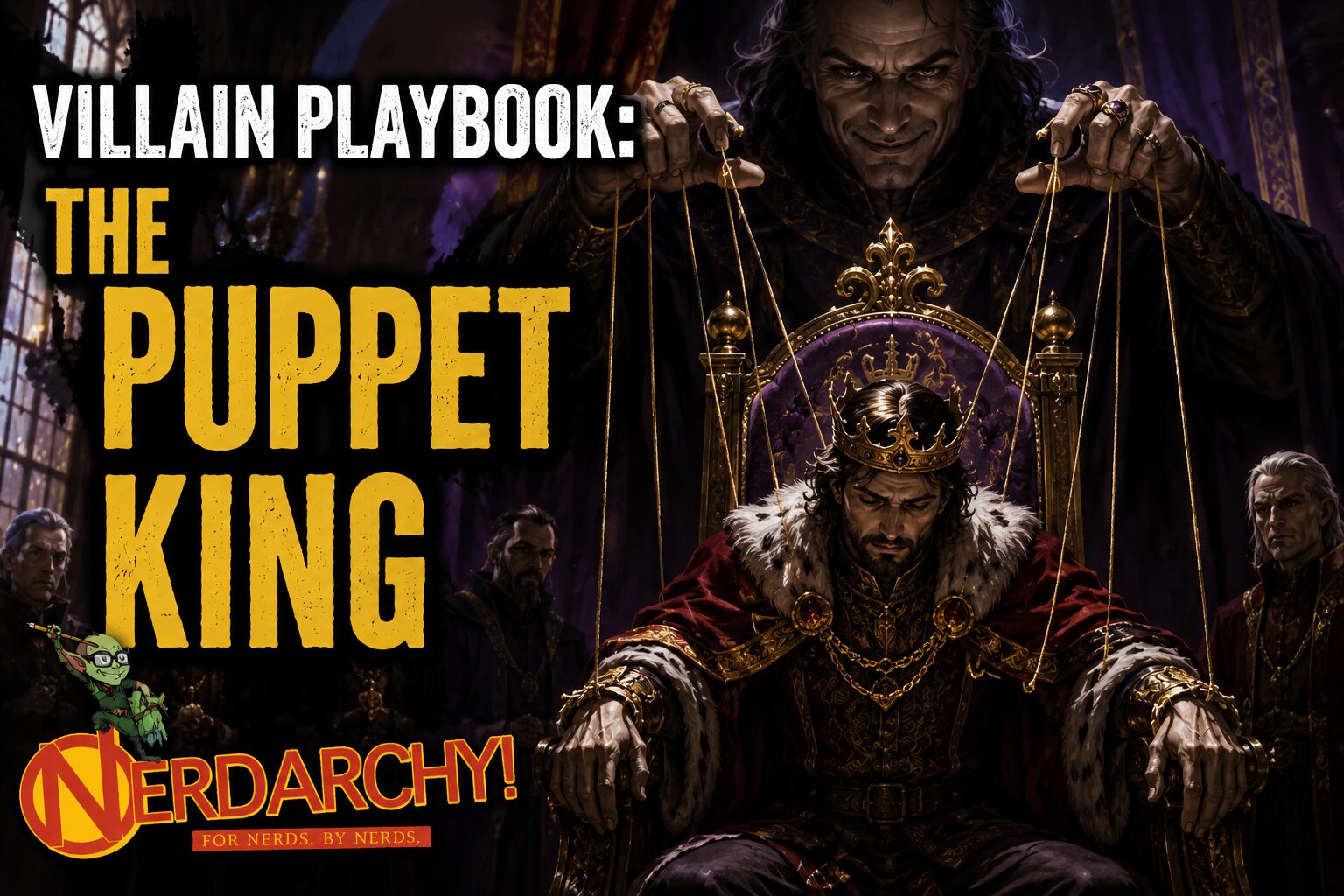
Villain Playbook: The Corrupt High Priest — Creating a Memorable D&D Villain
Evil temples are easy.
The cult worships a dark god, sacrifices innocents beneath a blood-red moon and summons demons from the depths of the Abyss. The heroes know exactly who the villains are, and everyone feels good when the final battle ends with the temple in ruins.
The Corrupt High Priest is far more dangerous.
They don’t lead a forbidden cult hidden in forgotten catacombs. They stand at the center of the city’s most beloved cathedral. They bless newborn children, comfort grieving families and counsel kings before they make life-changing decisions. Their sermons inspire

The Kraul death priest as seen in Guildmater’s Guide to Ravnica has death in its name and an array of nasty abilities to bring it to adventurers. [Image courtesy Wizards of the Coast]
That’s exactly what makes them terrifying.
The Corrupt High Priest doesn’t destroy faith.
They weaponize it.
What Is the Corrupt High Priest Villain Archetype?
The Corrupt High Priest holds tremendous spiritual authority, using religion as a tool to gain wealth, influence and control.
Sometimes they began as a sincere servant of their deity before ambition slowly consumed them. Other times they’ve always viewed the faith as little more than a means to an end. Either way, they have learned that people will often accept incredible sacrifices if they believe those sacrifices are divinely required.
The High Priest rarely needs to issue direct threats.
Instead, they convince others that obedience is the righteous path.
Questioning the church becomes questioning the gods themselves.
That is a powerful weapon.
Why the Corrupt High Priest Makes a Great D&D Villain
The Corrupt High Priest creates conflicts that cannot be solved with a single battle.
Unlike a necromancer hiding in a ruined tower, this villain enjoys the trust of the community. Merchants donate generously to the temple. Nobles seek spiritual guidance before making political decisions. City guards protect holy sites with unwavering devotion.
To most people, the High Priest is a hero.
When the adventurers begin accusing them of corruption, the heroes may find themselves treated as blasphemers rather than saviors.
Even worse, many of the priest’s followers are genuinely good people.
They feed the hungry.
Heal the sick.
Care for orphans.
The corruption lies at the top, not throughout the entire organization.
This forces players to carefully distinguish between exposing a villain and destroying an institution that still provides hope to countless innocent people.
How to Introduce a Corrupt High Priest in Your Campaign

Introduce the church as a force for good before revealing its flaws.
Allow the party to receive healing from temple clerics. Let them witness charitable work throughout the city. Show priests risking their own lives during times of plague or disaster.
Then introduce small inconsistencies.
A desperate widow is denied aid because she cannot afford an offering.
Ancient scriptures quietly disappear from the temple archives.
A respected priest suddenly vanishes after questioning church leadership.
Certain nobles always seem to receive divine blessings while the poor are told to endure their suffering with patience.
Each clue seems insignificant on its own.
Together, they reveal a pattern.
The temple serves the people.
The High Priest serves themselves.
Running the Corrupt High Priest Beyond Combat
The greatest strength of this villain is that they fight with influence instead of swords.
The heroes may discover evidence of corruption only to learn no one believes them. Witnesses refuse to testify. Records mysteriously vanish. Faithful citizens insist the accusations must be lies spread by enemies of the church.
The High Priest responds calmly to every allegation.
They forgive the adventurers publicly.
They pray for the heroes’ troubled souls.
They invite the people to show compassion toward those who have lost their way.
Every response strengthens their reputation while making the party appear increasingly unreasonable.

A Grave Domain cleric as seen in the fifth edition Dungeons & Dragons Xanathar’s Guide to Everything. [Image courtesy Wizards of the Coast]
Perhaps forbidden relics are hidden beneath the cathedral.
Perhaps the High Priest secretly bargains with fiends while preaching compassion above.
Or perhaps the deity itself has withdrawn its blessing, leaving the church’s miracles powered by something far darker.
Only then does the mask finally crack.
Using the Corrupt High Priest to Create Memorable D&D Stories
The best version of this villain is not someone who openly rejects their faith.
They’re someone who sincerely believes they deserve everything they’ve taken.
Perhaps they convince themselves that great wealth allows the church to accomplish greater good.
Perhaps every compromise was originally made to protect the innocent until those compromises became routine.
Or perhaps they truly believe the gods have chosen them personally, placing them above the very teachings they preach.
This kind of villain reminds players that corruption rarely begins with grand acts of evil.
It starts with small exceptions.
Small compromises.
Small lies told for noble reasons.
Over time, those compromises become doctrine, and those lies become sacred truth.
When the heroes finally confront the Corrupt High Priest, they aren’t merely battling a spellcaster wrapped in ceremonial robes.
They’re fighting an institution built upon unquestioned trust.
And sometimes, bringing down a false prophet is harder than slaying a dragon.
Thanks for reading. Until Next Time, Stay Nerdy!!


No Comments